

Introduction
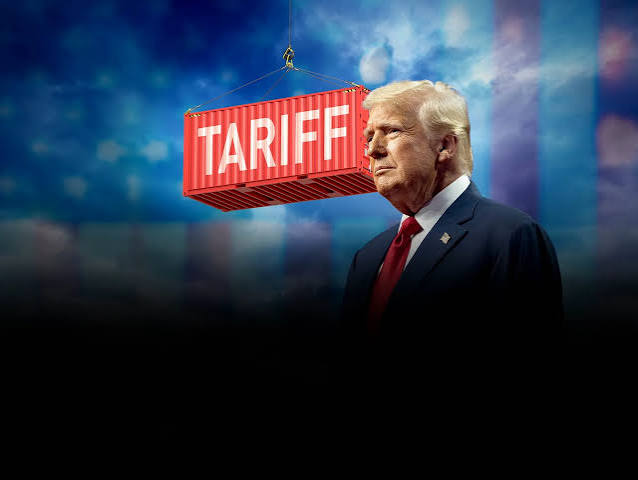
President Donald Trump has once again placed tariffs at the center of America’s economic strategy, opening a new and potentially disruptive chapter for U.S. trade.
The latest developments are significant. The United States has imposed a 50% tariff on a range of Canadian goods amid disputes involving industries including automobiles, alcohol, dairy products and other areas of trade. At the same time, new 25% tariffs are hitting billions of dollars of Brazilian exports, while separate negotiations with Canada and Mexico are putting fresh pressure on the future of North America’s trade framework.
For Trump, the argument behind tariffs has remained consistent: countries that want access to the enormous American consumer market should trade with the United States on terms that Washington considers fair. The administration also sees tariffs as a way to encourage companies to manufacture more products inside America rather than relying heavily on overseas factories.
That argument has political appeal, particularly in industrial regions where communities have watched factories close and manufacturing jobs move abroad over several decades.
Economically, however, the picture is far more complicated.
Tariffs can protect domestic producers from foreign competition and encourage companies to reconsider global supply chains. They can also generate revenue for the federal government. But tariffs are taxes on imported goods, and the cost does not simply disappear. Someone eventually pays it.
Sometimes foreign exporters reduce prices to remain competitive. Sometimes American importers absorb part of the additional cost. In many cases, businesses eventually pass at least some of that expense to consumers.
That is why Trump’s latest tariff strategy matters far beyond international politics.
It could affect prices inside American stores, manufacturing costs, corporate profits, investment decisions, financial markets and ultimately Federal Reserve policy.
The timing makes the situation particularly important.
The U.S. economy is already dealing with inflation above the Federal Reserve’s preferred level. Businesses have spent years adjusting supply chains following the pandemic, geopolitical conflicts and earlier trade restrictions. Consumers remain highly sensitive to the cost of everyday goods.
Adding another layer of tariffs could produce opportunities for some American industries while creating new problems for others.
The question is whether Trump’s strategy will ultimately bring more production and investment back to the United States—or whether the immediate cost of the trade confrontation will outweigh the long-term benefits.
The answer may depend on what happens over the next several months.
Why Trump Is Using Tariffs as a Central Economic Weapon
Trump’s view of international trade has always been different from the traditional free-trade approach followed by many previous U.S. administrations.
For decades, the dominant economic argument in Washington was that reducing trade barriers would make the global economy more efficient.
Companies could manufacture products wherever production was cheapest. Consumers would benefit from lower prices. Countries would become more economically connected, theoretically reducing the incentive for major geopolitical conflict.
This system helped create enormous global supply chains.
An American company could design a product in California, purchase components from several Asian countries, manufacture it elsewhere and sell the finished product around the world.
Consumers benefited from access to relatively inexpensive imported products.
But there was another side to globalization.
Some American manufacturing communities suffered significant job losses as production moved to countries where labor and operating costs were lower.
The United States also became heavily dependent on foreign suppliers for strategically important products.
The COVID-19 pandemic exposed some of those vulnerabilities.
Shortages of medical equipment, semiconductors and other essential products demonstrated what could happen when global supply chains suddenly stopped functioning normally.
Geopolitical competition with China created additional concerns.
Washington increasingly began viewing manufacturing capacity not simply as an economic issue but as a national security issue.
Trump’s tariff strategy is built around this changing view of globalization.
The basic idea is straightforward.
If producing goods abroad and importing them into America becomes more expensive, companies will have a stronger financial incentive to manufacture those products inside the United States.
A company facing a substantial tariff has several choices.
It can continue importing and pay the additional cost.
It can increase prices.
It can negotiate lower prices with foreign suppliers.
It can find a supplier in another country not facing the same tariff.
Or it can move production to the United States.
The Trump administration wants more companies to choose the final option.
If that happens on a large scale, tariffs could potentially contribute to increased factory construction and manufacturing investment.
New factories require workers.
They also create demand for construction, machinery, transportation and local services.
The economic benefits can spread beyond the company making the original investment.
But reshoring manufacturing is not simple.
Building a factory can take years.
Companies need land, workers, electricity, infrastructure and regulatory approvals.
Some products depend on supply chains that have developed overseas over decades.
Moving an entire production ecosystem is much more difficult than moving one factory.
Labor costs are another major consideration.
American workers generally earn significantly more than workers in many manufacturing economies.
Automation can reduce this difference, but it cannot eliminate it in every industry.
This means some products manufactured in the United States may still cost more than imported alternatives even after companies invest in domestic production.
Trump’s strategy therefore represents a major economic experiment.
The administration is betting that the long-term benefits of greater American manufacturing capacity will justify the short-term disruption created by tariffs.
Businesses must now decide whether those tariffs are permanent enough to justify billions of dollars in new investment.
That question is crucial.
Companies will be reluctant to move factories if they believe tariffs could disappear after the next election or trade agreement.
For reshoring to happen at the scale Trump wants, businesses need confidence that the economics of producing inside the United States will remain attractive for many years.
The Biggest Risk: Tariffs Could Keep Inflation Higher
The most immediate economic concern surrounding Trump’s tariff strategy is inflation.
A tariff is effectively a tax collected when certain goods enter the United States.
Suppose an American company imports a product worth $100 and that product faces a 25% tariff.
The importer could now face an additional $25 cost before accounting for other expenses.
The company must decide what to do with that cost.
It could absorb the entire amount, reducing its profit margin.
It could ask the foreign supplier to lower its price.
Or it could increase the price charged to American customers.
In reality, the burden is often shared.
This is why tariffs can create inflationary pressure without necessarily causing prices to rise by the full tariff percentage.
The impact also depends heavily on competition.
If an American business can easily switch to another supplier, the effect may be limited.
If there are few alternatives, the company may have little choice but to continue importing at a higher cost.
The latest tariffs involving Canada are particularly important because the American and Canadian economies are deeply connected.
For decades, businesses have built supply chains that cross the border repeatedly.
The automobile industry is one of the clearest examples.
A vehicle assembled in North America can contain parts produced in multiple locations.
Components may cross national borders during different stages of production.
Trade barriers can therefore increase costs in complicated ways.
The impact is not limited to finished imported cars.
Tariffs on parts or materials can increase production costs for factories located inside the United States.
This is one of the biggest misunderstandings in trade debates.
An “American-made” product may still depend heavily on imported components.
A U.S. manufacturer can therefore be hurt by tariffs even when the final product is produced domestically.
Brazil presents a different but equally important example.
The new U.S. tariffs affect billions of dollars of Brazilian exports across sectors including machinery, ethanol, apparel and wood products, although some major products have been exempted.
For individual American consumers, the impact of one country’s tariffs may appear relatively small.
But when tariffs are imposed across multiple trading partners and industries, the effects can accumulate.
Businesses may begin raising prices not because one specific tariff dramatically changed their costs but because their entire supply network has become more expensive.
This matters for the Federal Reserve.
The central bank has spent years trying to bring inflation under control.
Tariffs can make that job more difficult.
The Federal Reserve cannot remove tariffs.
It cannot negotiate trade agreements.
It cannot force foreign companies to reduce prices.
Its primary inflation-fighting tool is interest rates.
If tariffs contribute to persistent price increases, the Fed may feel pressure to keep rates higher for longer.
That could create an uncomfortable situation for Trump.
The president wants stronger economic growth and has frequently favored lower borrowing costs.
But aggressive tariff policies could contribute to inflationary pressures that make rapid interest-rate reductions more difficult.
Higher-for-longer rates would affect almost every part of the economy.
Mortgage borrowing could remain expensive.
Credit card interest rates could stay elevated.
Businesses could face higher financing costs.
Commercial real estate could remain under pressure.
Consumers might delay buying homes and vehicles.
In this sense, the biggest economic risk from tariffs may not simply be higher prices at stores.
The secondary effect through monetary policy could be equally important.
How the Trade Fight Could Affect American Companies and Financial Markets
Wall Street’s reaction to tariffs is rarely simple because different companies experience completely different effects.
A domestic steel producer may welcome protection from cheaper foreign competition.
An American manufacturer that uses imported steel may see its costs rise.
A retailer dependent on imported products may face pressure on profit margins.
A company with factories inside the United States could gain a competitive advantage if foreign rivals become more expensive.
This creates winners and losers throughout the stock market.
Large multinational companies face another problem: retaliation.
When the United States imposes tariffs on another country’s exports, that government can respond with tariffs of its own.
American agricultural products are often considered vulnerable in trade disputes because farmers depend heavily on international markets.
Aircraft, vehicles, technology products and consumer brands can also become targets.
Retaliation can transform a trade disagreement into a cycle.
The United States raises tariffs.
Another country responds.
Washington increases pressure again.
Businesses caught between governments face growing uncertainty.
For corporate executives, uncertainty can sometimes be more damaging than the tariff itself.
A company can adjust to a known 20% tariff.
It can change prices, renegotiate contracts or move production.
But planning becomes much harder when executives do not know whether the tariff will be 10%, 25% or 50% six months from now.
That uncertainty can delay investment.
A company considering a new factory may wait.
A retailer may order less inventory.
A business may postpone hiring.
These decisions can gradually slow economic activity.
The current situation involving Canada and Mexico is especially important because of the USMCA trade agreement.
North American supply chains have been built around the assumption that the United States, Canada and Mexico operate within a broadly integrated trade framework.
Separate negotiations between Washington and its two neighbors could change that balance.
If the three-country system becomes increasingly fragmented, companies may have to reconsider how they organize production across North America.
For investors, the immediate question is which industries have the most exposure.
Automakers are likely to remain closely watched.
Retailers could face pressure if import costs rise.
Industrial companies may benefit from reshoring investment while simultaneously dealing with higher material costs.
Transportation companies could experience changing trade flows.
Banks may be affected indirectly if business investment and economic growth weaken.
Technology companies face their own challenges because their supply chains are global.
Even companies that sell digital services depend on physical infrastructure, semiconductors and electronic equipment.
Energy markets could also respond to trade tensions.
Canada is an important economic and energy partner for the United States.
Any disruption affecting cross-border trade can have consequences that extend beyond the industries directly named in tariff announcements.
The U.S. dollar is another area to watch.
Trade policy can influence currencies through several competing channels.
Tariffs may strengthen the dollar if investors expect them to reduce imports or keep U.S. interest rates higher.
But prolonged economic uncertainty could create different pressures.
Currency movements then feed back into corporate profits and trade competitiveness.
This is why markets may remain volatile even when the direct economic cost of a specific tariff appears manageable.
Investors are not simply pricing today’s tariff.
They are trying to predict what comes next.
Will Canada retaliate?
Will Washington expand tariffs to additional products?
Will companies announce new U.S. factories?
Will inflation rise?
Will the Federal Reserve delay rate cuts?
Will consumers reduce spending?
Each answer can move markets in a different direction.
Can Trump’s Tariff Strategy Actually Bring Manufacturing Back to America?
The strongest argument in favor of Trump’s strategy is that the old global trade system created vulnerabilities that the United States can no longer ignore.
There is growing bipartisan agreement in Washington that America should not depend excessively on foreign countries for products essential to national security.
Semiconductors are one example.
Medicines are another.
Critical minerals, energy infrastructure, military equipment and advanced technology are increasingly viewed as strategic industries.
Trump’s approach is more aggressive than traditional industrial policy.
Instead of relying primarily on subsidies and tax incentives, tariffs create a direct financial penalty for companies that continue importing.
This can change business calculations quickly.
If a foreign-made product suddenly becomes dramatically more expensive because of tariffs, building a U.S. factory may begin to look more attractive.
The pharmaceutical industry is becoming an important part of this debate.
Trump has outlined a phased tariff approach intended to push more drug manufacturing toward the United States, adding another major industry to the administration’s broader reshoring strategy.
From a national security perspective, increasing domestic production of essential medicines has a clear argument behind it.
The pandemic demonstrated the risks of depending heavily on overseas medical supply chains.
But moving pharmaceutical manufacturing is difficult.
Drug production requires specialized facilities, regulatory approvals and highly controlled manufacturing processes.
These investments cannot appear overnight.
The same problem exists across many industries.
Tariffs can create the incentive to move production, but America must also have the capacity to receive that investment.
Factories need reliable electricity.
Companies need skilled workers.
Projects need permits.
Transportation infrastructure must be efficient.
Industrial land must be available.
If these conditions are not present, companies may respond to tariffs by moving production from one foreign country to another rather than returning to the United States.
This is sometimes called trade diversion.
For example, if imports from Country A become too expensive, a company may shift production to Country B.
The product is still manufactured overseas.
The supply chain has simply changed location.
For Trump’s strategy to produce a genuine American manufacturing revival, tariffs would probably need to be combined with broader policies involving workforce development, infrastructure, energy and investment incentives.
The United States also has to consider the cost to consumers.
Domestic production may provide greater economic security, but it is not always the cheapest option.
Americans may ultimately have to accept higher prices for certain products in exchange for more resilient domestic supply chains.
That is the central trade-off behind the new tariff era.
For decades, economic policy focused heavily on efficiency and low consumer prices.
The emerging model places greater value on security, domestic production and economic independence.
Trump is pushing that transition faster and more aggressively than almost any modern U.S. president.
Whether it succeeds will not be determined by tariff revenue alone.
The real measure will be investment.
Are companies actually building factories?
Are manufacturing jobs increasing?
Are supply chains becoming more resilient?
Are American-made products becoming competitive globally?
If the answer to those questions is yes, Trump will be able to argue that short-term economic disruption produced long-term benefits.
If companies simply raise prices, reduce investment or move production to other low-cost countries, the strategy will be much harder to defend.
Conclusion
Trump’s latest tariff push represents far more than another trade dispute.
It is part of a larger attempt to change the economic relationship between the United States and the rest of the world.
The administration wants foreign companies to face a clear choice: produce more inside America or risk losing competitiveness in the American market.
That strategy could generate significant investment.
It could support domestic manufacturing.
It could reduce dependence on foreign supply chains in strategically important industries.
But the transition comes with real financial risks.
Tariffs can increase costs for American companies.
Those costs can reach consumers through higher prices.
Retaliation can hurt exporters.
Trade uncertainty can delay investment.
And if tariffs contribute to persistent inflation, the Federal Reserve may have fewer opportunities to reduce interest rates.
That last point could become one of the most important economic stories of Trump’s tariff strategy.
The administration may successfully pressure companies to move production toward the United States, but if the process keeps inflation elevated, Americans could continue facing expensive mortgages, credit card debt and business loans.
The economic outcome will therefore depend on timing.
The costs of tariffs can appear quickly.
The benefits of new factories may take years.
Consumers could pay higher prices before new domestic production is ready.
Businesses may experience disruption before supply chains are rebuilt.
That gap between short-term costs and long-term benefits will test the administration’s strategy.
The escalating trade tensions with Canada, new tariffs affecting Brazilian exports and uncertainty surrounding North America’s trade framework show that Trump’s approach is entering a more consequential phase.
The next question is no longer whether Trump will use tariffs.
He clearly will.
The question is how far the strategy will go—and how businesses, consumers, trading partners and the Federal Reserve will respond.
For investors, the coming months could create both opportunities and risks.
Companies positioned to benefit from domestic manufacturing investment may gain.
Import-dependent businesses could struggle.
Industries exposed to retaliation may face uncertainty.
Markets could become increasingly sensitive to every new trade announcement.
For American households, the impact may eventually be much simpler.
People will judge the policy by what they experience in their everyday lives.
Are prices rising?
Are better-paying manufacturing jobs being created?
Are interest rates coming down?
Is the economy becoming stronger?
Those practical outcomes will ultimately determine whether Trump’s tariff strategy is remembered as the beginning of an American industrial revival or as an expensive period of global trade disruption.
For now, the economic experiment is still unfolding—and the financial consequences could shape the U.S. economy well beyond 2026.