
Global financial markets are facing a fresh wave of uncertainty as renewed tensions between the United States and Iran push oil prices higher and force investors to reconsider the outlook for inflation, interest rates and the U.S. economy.
The latest escalation has quickly become one of the most important stories in global finance. Oil prices surged after renewed military tensions raised concerns about energy supplies and the stability of the Middle East. At the same time, stocks and bonds came under pressure as investors attempted to understand whether the latest conflict could create another major inflation shock.
The situation is particularly important for the United States because higher oil prices can affect almost every part of the economy.
Consumers could face higher gasoline prices, companies could experience rising transportation and production costs, and the Federal Reserve could face an even more complicated decision about future interest rates.
For Wall Street, the biggest question is whether the latest increase in oil prices will be temporary or whether the global economy is entering another prolonged period of energy-driven inflation.
Oil Prices Jump as Geopolitical Risks Increase
Oil markets reacted strongly to the latest developments involving the United States and Iran.
Renewed tensions increased concerns that energy supplies from the Middle East could face disruptions. The region remains extremely important to the global oil market, and any major military escalation can quickly create uncertainty among traders.
Oil prices moved sharply higher as investors reacted to the possibility of additional conflict.
The situation has once again highlighted the importance of the Strait of Hormuz, one of the world’s most critical energy transportation routes.
Any serious disruption to oil shipments through the region could have significant consequences for global energy markets.
Even without a complete disruption, uncertainty alone can push oil prices higher because traders begin pricing additional geopolitical risk into the market.
For consumers and businesses, the consequences could become increasingly significant if oil prices remain elevated.
Higher crude oil prices can eventually increase gasoline, transportation and manufacturing costs.
That could create additional inflationary pressure at a time when the Federal Reserve is already facing difficult economic conditions.
Wall Street Faces a New Inflation Problem
Inflation has remained one of the biggest challenges for the U.S. economy.
The Federal Reserve has spent years attempting to control rising prices through monetary policy.
However, geopolitical events can quickly complicate the central bank’s strategy.
Higher energy prices can affect inflation in several ways.
Consumers may pay more for gasoline and electricity. Airlines and transportation companies may experience higher fuel expenses. Manufacturers could face increasing production and shipping costs.
Companies may eventually pass some of these additional expenses to consumers through higher prices.
This creates a major problem for the Federal Reserve.
If inflation remains elevated, the central bank may have fewer opportunities to reduce interest rates.
In some circumstances, policymakers could even face pressure to maintain restrictive monetary policy for longer than investors expect.
That possibility could create volatility across financial markets.
Technology stocks, growth companies and other investments that are sensitive to interest rates could experience pressure if borrowing costs remain high.
Federal Reserve’s Next Move Becomes Even More Complicated
The Federal Reserve is now facing an increasingly difficult economic environment.
On one side, signs of weakness in the U.S. labor market have created concerns about economic growth.
On the other side, rising energy prices could increase inflation.
This combination creates one of the most challenging situations for any central bank.
If the Federal Reserve keeps interest rates high, economic growth and employment could weaken further.
But if policymakers reduce rates too quickly, inflation could accelerate again.
Investors are therefore paying extremely close attention to economic reports and statements from Federal Reserve officials.
Employment numbers, inflation data, consumer spending and energy prices could all influence future monetary policy decisions.
The renewed geopolitical crisis has added another unpredictable factor.
Even the Federal Reserve cannot control international conflicts or global oil supplies.
As a result, policymakers may be forced to respond to economic consequences created by events outside the United States.
Rising Oil Prices Could Hit American Consumers
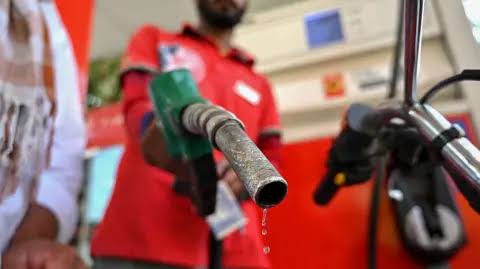
For millions of Americans, the most immediate impact of higher oil prices could appear at gasoline stations.
Fuel prices are closely watched because they directly affect household budgets.
When gasoline becomes more expensive, consumers have less money available for other purchases.
That can create problems for businesses.
Restaurants, retailers, travel companies and entertainment businesses could experience weaker consumer spending if households are forced to spend more money on energy.
Higher fuel prices can also increase the cost of transportation.
Trucking companies, airlines and delivery businesses depend heavily on energy.
If fuel costs remain high, companies may attempt to increase prices to protect profit margins.
This could create additional inflation throughout the economy.
The impact could become especially significant if geopolitical tensions continue for an extended period.
Energy Companies Could Benefit From Higher Prices
While rising oil prices create problems for consumers and many businesses, the energy sector could potentially benefit.
Major oil producers can generate stronger revenue when energy prices increase.
Higher crude prices can improve profitability for companies involved in oil production.
This creates an unusual situation for the stock market.
While technology, transportation and consumer companies could face pressure from higher energy costs, oil and gas companies may attract additional investor interest.
Energy stocks could therefore become increasingly important for Wall Street.
However, higher oil prices do not automatically guarantee stronger profits for every energy company.
Production expenses, government policies and changes in global demand can also influence financial performance.
Still, the energy sector is likely to remain one of the most closely watched areas of the market as geopolitical uncertainty continues.
Could Higher Oil Prices Trigger a Stock Market Correction?
One of the biggest concerns among investors is whether rising energy prices could contribute to a broader market decline.
The U.S. stock market is already dealing with several major risks.
Technology stocks have experienced volatility, concerns about expensive AI valuations remain, and investors are uncertain about future Federal Reserve policy.
A major increase in oil prices could add another source of pressure.
If higher energy costs increase inflation, interest rates could remain elevated for longer.
Higher rates can reduce the attractiveness of expensive growth stocks.
At the same time, consumers could reduce spending because of rising gasoline prices.
Corporate profits could also come under pressure as companies face higher operating expenses.
These factors could potentially create a difficult environment for Wall Street.
However, the ultimate impact will depend on how long geopolitical tensions continue and whether global oil supplies experience serious disruptions.
The U.S. Dollar and Gold Could Also See Major Moves
The impact of geopolitical uncertainty extends beyond stocks and oil.
Currency and commodity markets could also experience significant volatility.
During periods of global uncertainty, investors often reconsider their exposure to riskier assets.
The U.S. dollar can sometimes attract demand during periods of market stress because of its important role in the global financial system.
Gold is another asset closely watched during geopolitical crises.
Investors have historically considered gold a potential safe-haven investment.
However, the relationship between gold, interest rates and the U.S. dollar can be complicated.
Higher interest rates and a stronger dollar can create pressure on gold prices.
At the same time, geopolitical uncertainty can increase demand for defensive assets.
Investors will therefore continue monitoring movements across currencies, precious metals and government bonds.
Is Another Global Inflation Shock Coming?
The biggest financial question created by the latest geopolitical escalation is whether the world could face another major inflation shock.
Energy prices influence almost every economy.
Countries that depend heavily on imported oil could face particularly serious challenges if prices remain high.
Rising transportation and manufacturing expenses could increase the cost of goods.
Central banks may then face pressure to maintain higher interest rates.
This could slow economic growth.
The situation could become particularly dangerous if higher inflation occurs at the same time as weaker economic activity.
Economists closely monitor this possibility because it can create an extremely difficult environment for governments, central banks, businesses and consumers.
However, it is still unclear whether the latest increase in oil prices will become a long-term economic problem.
Much will depend on future developments involving the United States, Iran and global energy markets.
What Investors Should Watch Next
The coming days could be extremely important for financial markets.
Investors will closely monitor developments in the Middle East and any signs of disruption to global oil supplies.
Oil prices will remain one of the most important indicators.
If crude prices continue rising, concerns about inflation could increase.
Wall Street will also focus on upcoming U.S. economic data.
Inflation reports, employment numbers and consumer spending data could provide important information about the health of the American economy.
Federal Reserve officials will also remain under close observation.
Any change in monetary policy expectations could create significant movements in stocks, bonds and currencies.
Corporate earnings will become another important factor.
Investors will want to understand how companies are dealing with higher energy costs and economic uncertainty.
Conclusion
Renewed tensions between the United States and Iran have created another major challenge for global financial markets.
Rising oil prices are increasing concerns about inflation, consumer spending and the future direction of Federal Reserve monetary policy.
Wall Street now faces a complicated combination of geopolitical uncertainty, economic weakness, high interest rates and volatile technology stocks.
The biggest risk is that prolonged increases in energy prices could create additional inflationary pressure across the U.S. economy.
That could force the Federal Reserve to maintain higher interest rates and increase pressure on consumers and businesses.
However, the ultimate economic impact will depend on how the geopolitical situation develops and whether global energy supplies face significant disruption.
For now, oil prices, inflation expectations and Federal Reserve policy are likely to remain at the center of global financial markets.
Investors should prepare for continued volatility as Wall Street attempts to determine whether the latest crisis will become a temporary market shock or the beginning of a much larger economic challenge.