

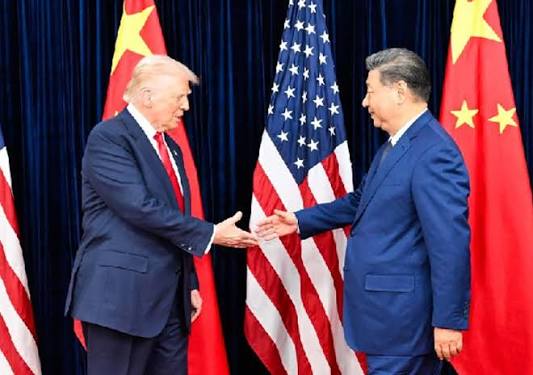
After years of tariffs, sanctions, and geopolitical tensions, the United States and China have taken fresh steps toward stabilizing their trade relationship. Recent meetings between President Donald Trump and President Xi Jinping have resulted in a temporary trade truce, tariff reductions on selected goods, and renewed negotiations on key issues such as rare earth minerals, agriculture, and supply-chain security. However, experts caution that the agreement is still a framework rather than a comprehensive trade deal.
While financial markets welcomed the easing of tensions, investors are asking one key question:
Is this the beginning of a long-term economic partnership—or just a temporary pause in the trade war?
What’s New in the Latest Trade Agreement?
Recent negotiations have produced several important developments:
- Both countries agreed to continue high-level trade talks.
- Tariffs on some products have been reduced compared with peak trade-war levels.
- China has indicated it will continue supplying critical rare earth materials.
- The U.S. has emphasized stronger supply-chain security while maintaining restrictions in sensitive technology sectors.
- Both sides are attempting to reduce trade uncertainty without fully resolving their long-standing disputes.
✅ Pros of the Latest U.S.–China Trade Deal
1. Lower Trade Tensions
The biggest positive is that businesses now face less uncertainty than during the height of the trade war.
Lower tensions improve confidence for:
- Manufacturers
- Exporters
- Global investors
- Supply-chain companies
2. Better Global Supply Chains
The agreement could reduce disruptions in industries such as:
- Electronics
- Automotive
- Industrial equipment
- Consumer goods
Companies may benefit from smoother cross-border trade.
3. Reduced Inflation Pressure
Lower tariffs can reduce import costs.
If companies pay less for imported goods, consumers may eventually benefit through lower prices, helping central banks manage inflation more effectively.
4. Positive for Financial Markets
Historically, every major improvement in U.S.–China relations has supported:
- U.S. stocks
- Asian markets
- Industrial companies
- Semiconductor firms
- Commodity prices
Markets generally react positively when geopolitical uncertainty declines.
5. Stronger Business Confidence
Large multinational companies prefer predictable trade policies.
Greater stability allows businesses to:
- Plan investments
- Expand production
- Hire workers
- Increase capital spending
❌ Cons of the Latest Trade Deal
1. It’s Not a Permanent Agreement
Most analysts believe this is a temporary truce rather than a final settlement.
Several difficult issues remain unresolved, including:
- Intellectual property protection
- Technology restrictions
- National security concerns
- State subsidies
- Market access
These disagreements could easily reignite tensions.
2. Tariffs Have Not Disappeared
Although some tariffs have been reduced, many trade restrictions remain in place.
Businesses are still paying higher costs compared with pre-trade-war conditions.
3. Technology War Continues
Even as trade negotiations improve, competition over advanced technologies remains intense.
Areas still under pressure include:
- AI chips
- Semiconductors
- Quantum computing
- Advanced manufacturing
- National security technologies
This means economic cooperation has limits.
4. Supply-Chain Diversification Will Continue
Many companies are no longer willing to depend entirely on one country.
Manufacturers continue expanding production into:
- India
- Vietnam
- Mexico
- Southeast Asia
This trend is expected to continue regardless of the latest agreement.
5. Political Risks Remain High
Future elections, geopolitical events, or disagreements over Taiwan, technology, or national security could quickly reverse recent progress.
Markets therefore remain cautious despite the improved tone.
Who Benefits the Most?
Likely Winners
- Semiconductor companies
- Industrial manufacturers
- Shipping and logistics firms
- Agricultural exporters
- Commodity producers
- Global multinational corporations
Sectors Still Facing Uncertainty
- Advanced chip manufacturers
- Defense companies
- Cybersecurity firms
- Strategic technology businesses
What Does This Mean for Investors?
Investors should monitor:
- Future tariff announcements.
- Rare-earth export agreements.
- Semiconductor restrictions.
- U.S.–China diplomatic meetings.
- Trade volume between both countries.
- Supply-chain investment trends.
These factors will determine whether the relationship continues improving or deteriorates again.
Finbite Analysis
The latest U.S.–China trade agreement is a positive step—but not the end of the trade conflict.
It reduces short-term uncertainty and supports global markets, yet the fundamental strategic rivalry between the world’s two largest economies remains unchanged.
For investors, the biggest opportunity lies in sectors that benefit from improving trade flows. However, caution is still warranted because unresolved disputes over technology, national security, and industrial policy could trigger fresh tensions at any time.
The next phase of negotiations will likely determine whether this framework evolves into a lasting trade partnership—or proves to be only another temporary ceasefire.