

Introduction
Choosing the best credit card for daily life in the United States can be surprisingly difficult. American consumers have access to hundreds of credit cards offering cash back, travel points, welcome bonuses, introductory interest rates, and special rewards for categories such as groceries, dining, gas, streaming services, and online shopping.
However, the best everyday credit card is not necessarily the card with the largest advertised bonus or the most luxurious benefits.
For most people, an everyday credit card should provide strong rewards on purchases they already make, charge a reasonable or zero annual fee, and be simple enough to use without constantly thinking about complicated reward rules.
Daily expenses can include groceries, restaurant meals, gas, transportation, online purchases, subscriptions, entertainment, pharmacy purchases, and general shopping. Because every household spends differently, no single credit card is perfect for everyone.
Still, several cards stand out in 2026.
For consumers who spend heavily on groceries, dining, entertainment, and streaming, the Capital One Savor Cash Rewards Credit Card can be one of the strongest everyday options. It offers 3% cash back in several popular daily spending categories, including eligible grocery store purchases and dining, while charging no annual fee.
Consumers who want maximum simplicity may prefer a flat-rate cash-back card. A card that effectively earns 2% cash back on general purchases can be more valuable for someone whose spending is spread across many different categories.
The Chase Freedom Unlimited is another popular option because it combines a base cash-back rate with higher rewards on categories such as dining and drugstore purchases.
Meanwhile, cards such as the Wells Fargo Autograph can be attractive to consumers whose regular expenses include restaurants, gas, travel, and other qualifying categories.
The right choice ultimately depends on how a person spends money.
The most important question is not, “Which credit card offers the biggest rewards?”
A better question is, “Which credit card gives me the highest value from purchases I would make anyway?”
Capital One Savor: A Strong Choice for Everyday Spending
For many American households, a large portion of monthly spending goes toward food.
People buy groceries, order takeout, visit restaurants, pay for streaming services, and spend money on entertainment.
This is where the Capital One Savor Cash Rewards Credit Card can become particularly attractive.
As of 2026, the card offers 3% cash back at eligible grocery stores, on dining, entertainment, and popular streaming services. It also offers 1% cash back on general purchases outside its higher-earning categories.
The card has no annual fee.
This combination makes it relatively easy to understand and potentially valuable for everyday consumers.
Consider someone who spends $600 per month at qualifying grocery stores and $300 per month on restaurants and takeout.
That represents $900 in monthly spending across categories earning 3% cash back.
Over a year, the total qualifying spending would reach $10,800.
At a 3% cash-back rate, that could generate $324 in rewards, assuming all purchases qualify.
Additional spending on entertainment and eligible streaming services could increase total rewards.
The advantage is that these are not necessarily luxury expenses.
Groceries are essential for most households, and dining represents a regular expense for many Americans.
The entertainment category can also make the card attractive to younger consumers and families who frequently attend eligible events or activities.
Another advantage is simplicity.
Some credit cards offer 5% cash back in categories that change every quarter. These cards can provide excellent value, but cardholders may need to activate categories and remember which purchases qualify during each period.
The Savor structure can be easier for people who prefer consistent reward categories.
However, the card is not perfect for everyone.
Its standard cash-back rate on purchases outside bonus categories is lower than what some flat-rate cash-back cards provide.
Someone who spends heavily on expenses that do not fall into the Savor bonus categories may earn more with a card offering 2% cash back across general purchases.
For example, imagine someone spends relatively little on dining and entertainment but frequently makes purchases related to home improvement, medical bills, insurance, professional services, and miscellaneous retail shopping.
A flat-rate rewards card could potentially provide greater overall value.
Consumers should also carefully check what qualifies as a grocery store purchase.
Superstores and certain large retailers may not receive the same bonus rewards as traditional qualifying supermarkets.
Merchant coding determines how many credit card rewards are calculated.
A customer may personally consider a purchase to be groceries, but the credit card network could classify the merchant differently.
Despite these limitations, the Capital One Savor remains a strong candidate for everyday spending because its major bonus categories closely match common American household expenses.
For someone who frequently buys groceries, eats at restaurants, uses streaming subscriptions, and spends on entertainment, it can serve as a simple primary credit card.
Other Excellent Everyday Credit Cards Worth Considering
While the Capital One Savor can be a strong overall choice, different consumers may get better value from other cards.
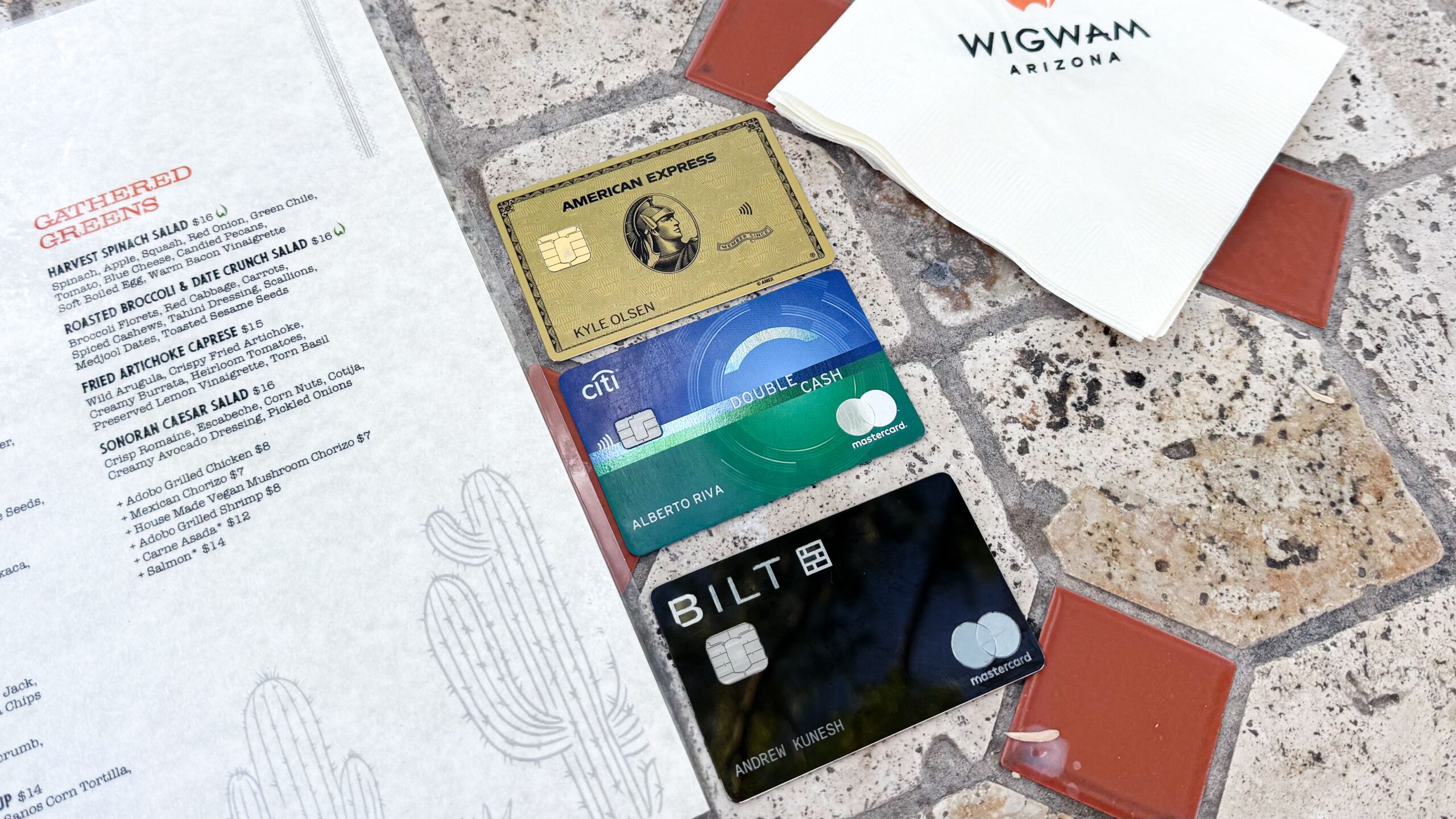
One important alternative is the Citi Double Cash Card.
Its main attraction is simplicity.
Rather than requiring users to track multiple spending categories, the card can effectively provide 2% cash back on purchases under its standard earning structure: part when making a purchase and part when paying it off.
For everyday consumers whose expenses are distributed across many categories, a flat-rate structure can be extremely useful.
Imagine someone spends $30,000 per year on a credit card.
If most purchases do not qualify for special bonus categories, earning an effective 2% cash back could generate approximately $600 in rewards.
A category-based card earning only 1% on much of that spending might generate considerably less.
This is why flat-rate cards can be excellent “catch-all” cards.
The Chase Freedom Unlimited offers a different approach.
It combines rewards for general spending with higher cash-back opportunities in certain categories.
The card earns 3% cash back on dining and eligible drugstore purchases, while general purchases earn a lower base rate.
For consumers who frequently visit restaurants and pharmacies, the structure can be attractive.
The Chase rewards ecosystem can also be valuable to consumers who use other eligible Chase cards.
Another option is the Wells Fargo Autograph Card.
It can be particularly useful for people whose daily lifestyle involves spending across categories such as restaurants, gas stations, travel, transit, streaming services, and qualifying phone plans.
The card offers elevated points in multiple categories without an annual fee.
For someone who drives regularly, eats out frequently, and occasionally travels, this broad rewards structure can provide significant value.
Consumers who want to maximize one particular category may consider the Citi Custom Cash Card.
The card automatically offers higher rewards on the cardholder’s top eligible spending category each billing cycle, subject to its spending limit and terms.
This can be useful as part of a multi-card strategy.
For example, someone could use one card for groceries, another for dining, and Citi Custom Cash for gas.
However, this strategy requires more management.
Not everyone wants to carry several credit cards and remember which card should be used for each transaction.
The Bank of America Customized Cash Rewards Credit Card provides another flexible approach.
It allows cardholders to earn elevated cash back in an eligible category of their choice, along with additional rewards at grocery stores and wholesale clubs, subject to quarterly spending limits.
This flexibility can be valuable because spending habits change.
A consumer may spend heavily on online shopping during one period and prioritize another eligible category later.
The best card therefore depends heavily on the consumer’s lifestyle.
A family spending large amounts at supermarkets may prioritize grocery rewards.
A young professional living in a large city may spend more on restaurants, transit, and entertainment.
Someone driving long distances for work may prioritize gas rewards.
A frequent traveler may prefer points and travel benefits rather than simple cash back.
For many consumers, using two complementary cards may generate better rewards than trying to find one perfect card.
For example, a person could use the Capital One Savor for eligible groceries and dining while using a flat-rate 2% cash-back card for purchases that earn only 1% on Savor.
This strategy can increase rewards without becoming excessively complicated.
However, consumers should avoid opening multiple cards simply to chase rewards.
Each credit application can affect a credit profile, and managing several accounts requires financial discipline.
Rewards have value only when credit cards are used responsibly.
How to Choose the Best Credit Card for Your Daily Lifestyle
The first step in choosing an everyday credit card is understanding where your money actually goes.
Many consumers think they know their spending habits but may be surprised when they review several months of bank and credit card statements.
Someone may believe groceries are their largest expense when general online shopping actually represents more spending.
Another person may underestimate how much they spend at restaurants.
Consumers should ideally examine several months of expenses and divide purchases into categories such as groceries, dining, gas, travel, entertainment, online shopping, drugstores, and general purchases.
The best card can then be selected based on actual spending rather than advertising.
Annual fees are another important consideration.
A credit card with an annual fee is not automatically bad.
If the rewards and benefits exceed the fee, the card can provide excellent value.
However, for everyday consumers seeking a simple card, a no-annual-fee option is often easier to justify.
Suppose one card costs $95 per year but generates only $50 more in rewards than a comparable free card.
In that situation, paying the annual fee may not make financial sense.
Interest rates are even more important than rewards.
Credit card APRs can be extremely high.
If a consumer carries a balance from month to month, interest charges can quickly exceed the value of cash-back rewards.
Imagine earning $300 in annual cash back but paying $1,000 in credit card interest.
The rewards have not created a financial benefit.
For this reason, the best rewards strategy is generally to pay the statement balance in full and on time whenever possible.
A person who expects to carry significant debt should focus more on reducing borrowing costs than maximizing rewards.
Welcome bonuses can also be attractive, but they should be treated carefully.
Some cards offer a cash bonus after the customer spends a required amount within the first few months.
A welcome offer can significantly increase first-year value.
However, consumers should never spend more than they normally would simply to earn a bonus.
Spending $1,000 unnecessarily to earn a $200 reward still leaves the consumer financially worse off.
Foreign transaction fees matter for people who travel internationally.
A card that charges no foreign transaction fees can be useful for purchases outside the United States.
Travelers should also consider whether their card is widely accepted at their destinations.
Credit score requirements are another factor.
Many of the strongest rewards cards are designed for applicants with good or excellent credit.
Approval is never guaranteed.
Consumers should avoid repeatedly applying for cards for which they are unlikely to qualify.
Credit card benefits can also change over time.
A card that is excellent in 2026 may become less competitive if its issuer changes reward categories, annual fees, or other benefits.
Consumers should review their credit card strategy periodically.
Security and customer service should also be considered.
Fraud alerts, card-locking features, mobile app quality, virtual card numbers, and customer support can significantly affect the everyday experience.
The best credit card is not necessarily the one that produces the mathematically highest possible reward.
Convenience has value.
For someone who wants simplicity, a flat-rate card may be better than managing multiple rotating reward categories.
For someone who enjoys optimizing every purchase, combining several cards can generate higher returns.
Personal spending habits should drive the decision.
Conclusion
So, which credit card is best for daily life in the USA in 2026?
There is no universal winner, but the Capital One Savor Cash Rewards Credit Card is a particularly strong option for consumers whose everyday spending centers around eligible groceries, dining, entertainment, and streaming services.
Its combination of 3% cash back in several popular categories and no annual fee makes it attractive for many households.
However, consumers with different spending patterns may find better alternatives.
The Citi Double Cash Card can be a strong choice for people who want simple rewards across general purchases.
The Chase Freedom Unlimited can work well for consumers who spend frequently on dining and drugstore purchases while also wanting rewards on everyday spending.
The Wells Fargo Autograph Card may appeal to people who spend heavily across restaurants, gas, travel, transit, and other eligible lifestyle categories.
Meanwhile, specialized cards can provide even higher rewards for consumers willing to manage multiple accounts.
The most effective strategy begins with understanding personal spending.
Consumers should calculate how much they spend each year in major categories and estimate the rewards each card would generate.
Annual fees, spending caps, redemption rules, and account requirements should then be subtracted from the potential value.
Most importantly, credit card rewards should never encourage unnecessary spending.
Even the best cash-back card becomes expensive if the cardholder carries large balances and pays high interest charges.
For responsible users who pay their bills in full, however, a well-chosen everyday credit card can turn ordinary expenses into meaningful rewards.
Groceries, restaurant meals, gas, entertainment, and other daily purchases can generate hundreds of dollars in annual cash back depending on spending levels.
For many Americans in 2026, the best everyday strategy may be surprisingly simple: choose a no-annual-fee card that rewards the categories where you already spend the most, pay the balance in full, and avoid changing your lifestyle merely to earn points or cash back.
Based on that principle, Capital One Savor is one of the strongest all-around choices for food and lifestyle spending, while a flat-rate 2% cash-back card may be better for consumers whose purchases are spread across many different categories.
Ultimately, the best credit card is not the card with the most impressive advertisement.
It is the card that fits naturally into your daily life, provides valuable rewards on your existing spending, keeps fees under control, and helps you use credit responsibly over the long term.
Credit card offers, reward rates, APRs, and eligibility requirements can change, so consumers should always verify the latest terms directly with the card issuer before applying.