

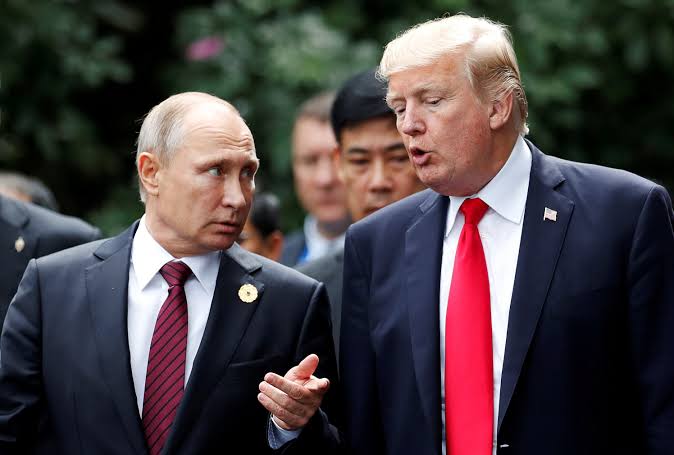
Introduction
Financial tensions between the United States and Russia are once again attracting global attention as sanctions, energy revenues, geopolitical conflicts and slowing economic growth create new uncertainty for investors.
Russia’s economy is showing increasing signs of pressure after years of Western sanctions and massive government spending linked to the war in Ukraine. At the same time, Washington continues to use financial restrictions and economic pressure as major tools of foreign policy.
Recent economic data has raised fresh questions about Russia’s ability to maintain long-term financial stability. Russia’s economic growth slowed sharply to around 1% in 2025 after expanding 4.9% in 2024, while the economy contracted 0.2% in the first quarter of 2026, according to recent reporting.
The situation has created a major financial question for global markets: Could rising economic pressure on Russia trigger a new phase of financial confrontation between Moscow and Washington?
Russia’s Economy Is Facing Growing Pressure
Russia managed to demonstrate surprising economic resilience during the early years of Western sanctions. High government spending, military production and energy exports helped support economic activity.
However, the situation appears to be becoming increasingly difficult.
High interest rates, Western sanctions, a strong ruble and pressure on government finances have contributed to weaker economic growth.
Russia’s commodity-dependent economy is now facing questions about whether the economic model that supported growth during the war can continue delivering results.
The slowdown is particularly important because Moscow must balance several expensive priorities.
The government needs to finance military spending, support domestic industries and maintain economic stability while dealing with international sanctions and restrictions on access to Western financial markets.
If economic growth remains weak, these challenges could become increasingly difficult to manage.
U.S. Sanctions Remain a Powerful Financial Weapon
The United States and its allies have used sanctions to limit Russia’s access to global financial networks, technology and international markets.
Energy remains one of the most important areas of financial conflict.
Russia is one of the world’s major oil and gas producers, making energy revenues extremely important for government finances.
Washington and its allies have attempted to reduce Russia’s ability to generate revenue from energy exports without creating an extreme disruption in global oil markets.
This has created a complicated financial battle.
If restrictions on Russian energy become significantly stronger, Moscow could face additional pressure on government revenues.
However, aggressive restrictions on Russian oil exports could also create risks for global energy prices.
A major increase in oil prices could raise inflation in the United States and other economies, creating new challenges for central banks and consumers.
This means economic pressure on Russia could potentially create unexpected financial consequences for Western countries as well.
Could U.S.–Russia Financial Tensions Hit Global Markets?
The financial conflict between Washington and Moscow extends far beyond the two countries.
Energy markets, currencies, international trade and global investment flows can all be affected by changes in U.S.–Russia relations.
If geopolitical tensions increase significantly, investors may move toward assets traditionally viewed as safer during periods of uncertainty.
Oil and gas prices could also experience major volatility.
Higher energy prices can increase transportation and manufacturing costs, potentially contributing to inflation.
This could complicate the Federal Reserve’s monetary policy decisions.
If inflation remains elevated because of energy market disruptions, interest rates could stay higher for longer than investors expect.
Such a situation could create pressure on stocks, bonds, businesses and consumers.
The financial consequences of U.S.–Russia tensions could therefore spread throughout the global economy.
Is Russia’s War Economy Reaching Its Limit?
One of the most controversial financial questions of 2026 is whether Russia’s war-driven economic model is becoming increasingly difficult to sustain.
Government spending helped support economic activity and industrial production during the conflict.
However, high spending cannot automatically guarantee sustainable long-term economic growth.
Businesses need investment, consumers need purchasing power and governments need reliable sources of revenue.
If energy revenues weaken while government expenses remain elevated, pressure on Russia’s finances could increase.
Recent economic analysis has suggested that Russia is facing structural economic challenges after years of war-related spending.
At the same time, predicting a sudden economic collapse would be extremely risky.
Russia remains a major global energy exporter and has developed stronger economic relationships with countries outside the Western alliance.
The real question may therefore not be whether Russia’s economy suddenly collapses.
Instead, investors may need to ask whether years of slow growth, financial restrictions and expensive government commitments could gradually weaken Russia’s long-term economic position.
Conclusion
The financial confrontation between the United States and Russia is entering another critical period.
Russia is facing slower economic growth, sanctions and growing questions about the sustainability of its war-driven economy.
Meanwhile, the United States continues to use financial restrictions and economic pressure as strategic tools.
However, the consequences of this confrontation are not limited to Moscow and Washington.
Oil prices, inflation, global trade, currencies and financial markets could all be affected by future developments.
If sanctions become more aggressive or geopolitical tensions increase, global markets could experience additional volatility.
On the other hand, any meaningful improvement in diplomatic relations could create new economic opportunities and potentially reshape global investment expectations.
For now, investors are watching one critical question: Will economic pressure force a major change in U.S.–Russia relations, or will the financial confrontation become an even bigger risk for the global economy?
Disclaimer: This article is for informational and educational purposes only. It does not constitute financial, investment, tax or legal advice. Readers should conduct independent research before making financial decisions.